Death of the Liberal Class: Chapter III/Dismantling the Liberal Class
Excerpted from Chris Hedges’ 2010 Pulitzer Prize winning volume to help us absorb the predictable pattern of our ways.
To those of us who still retain an reconcilable animus against war, it has been a bitter experience to see the unanimity with which the American intellectuals have thrown their support toward the war technique in the crisis in which America finds herself.
Socialists, college professors, publicists, new Republicans, practitioners of literature, have vied with each other in confirming with their intellectual faith, the collapse of neutrality and the turn toward a riveting war-mind.
-Randolph Bourne, ‘The War and the Intellectuals’, 1917
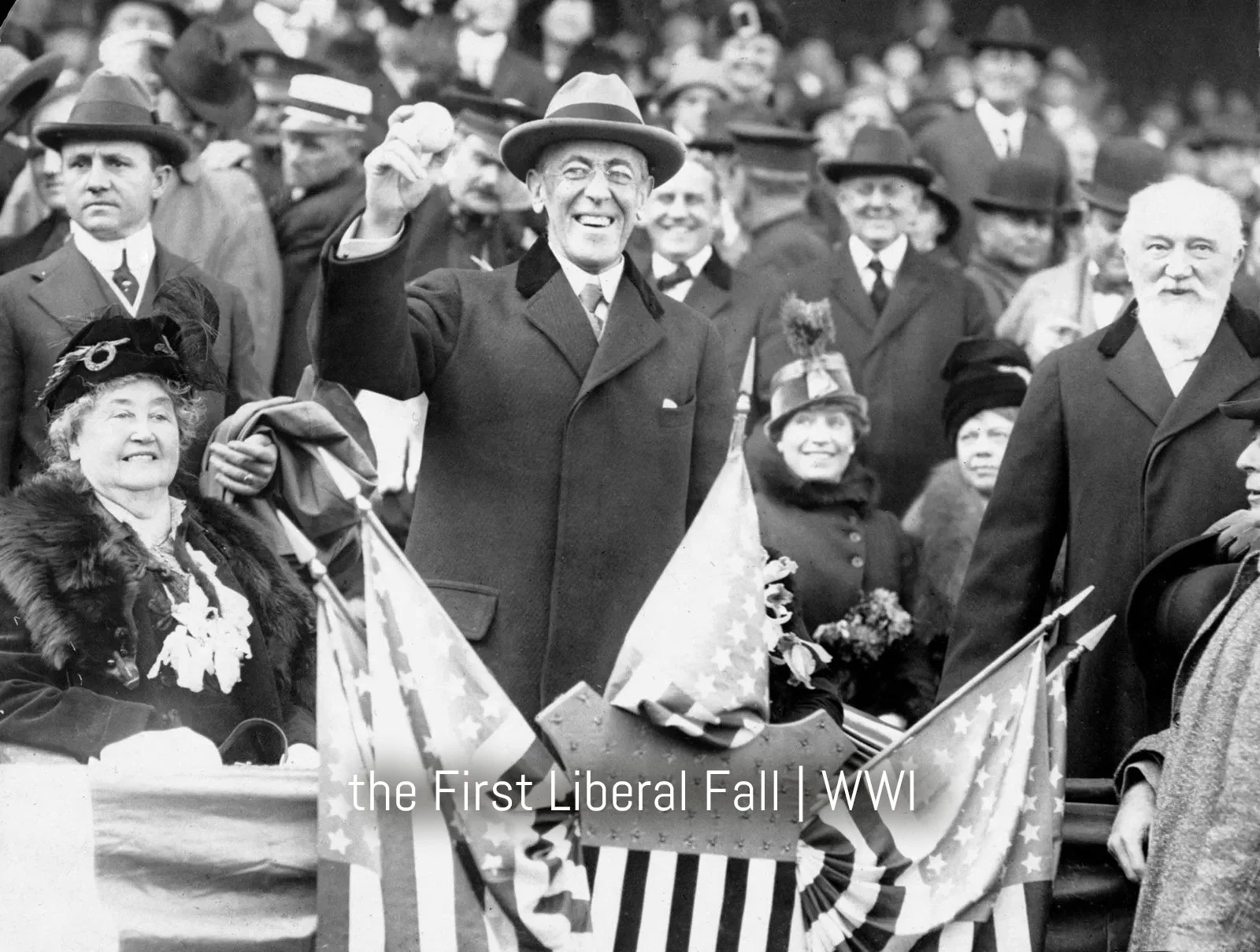
For context: Woodrow Wilson was a Progressive Democrat who led the Progressive Movement during his presidency from 1913 to 1921. His ‘New Freedom’ agenda included significant economic and labor reforms, and he supported constitutional amendments that made him a key figure in shaping the Progressive Era.
Wilson who, in 1916, had campaigned for re-election on the slogan ‘he kept us out of the war’, had reversed himself. He had called on Congress to commit United States troops to the brutal trench warfare and industrial slaughter that was tearing Europe apart and had already consumed the lives of millions of young men.
He had done so although America was a fractious, divided nation that remained deeply skeptical about involving itself in Europe's seventh self slaughter.
World War I ushered in the modern era.
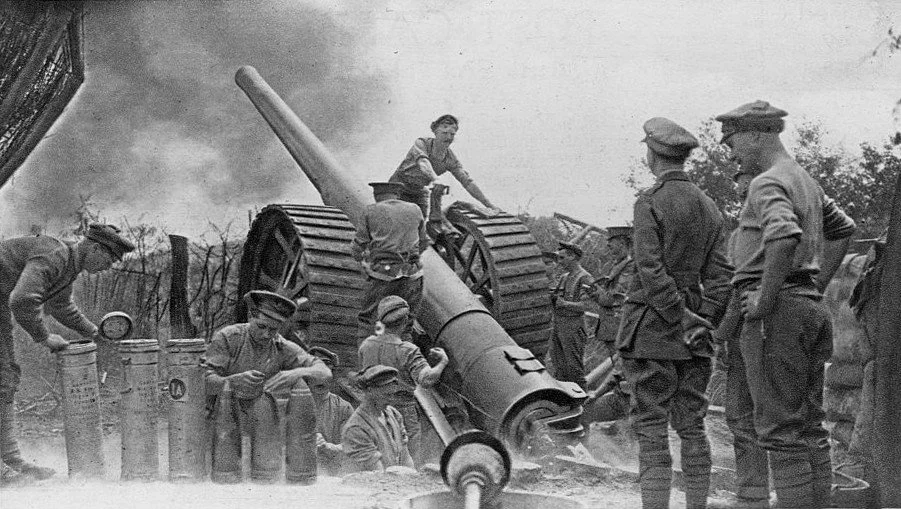
The War bequeathed industrial killing wars fought with machines and sustained by industrial production, as well as vast wartime bureaucracies, which could, for the first time, administer and organize impersonal, mass slaughter over months and years that left hundreds or 1000s dead in an instant. Civil War, battles rarely lasted more than two or three days. Battles in the new age of industrial warfare could rage for weeks and months with a steady flow of new munitions and mechanized transports that delivered troops by ship, rail and motorized vehicles to the battlefield.
World War I gave birth to the terrible Leviathan of total war.
Just as ominously, the war unleashed radical new forms of mass propaganda and mass manipulation that made it possible to engineer public opinion through the technological innovations of radio, cinema, photography, cheap mass publications and graphic art.
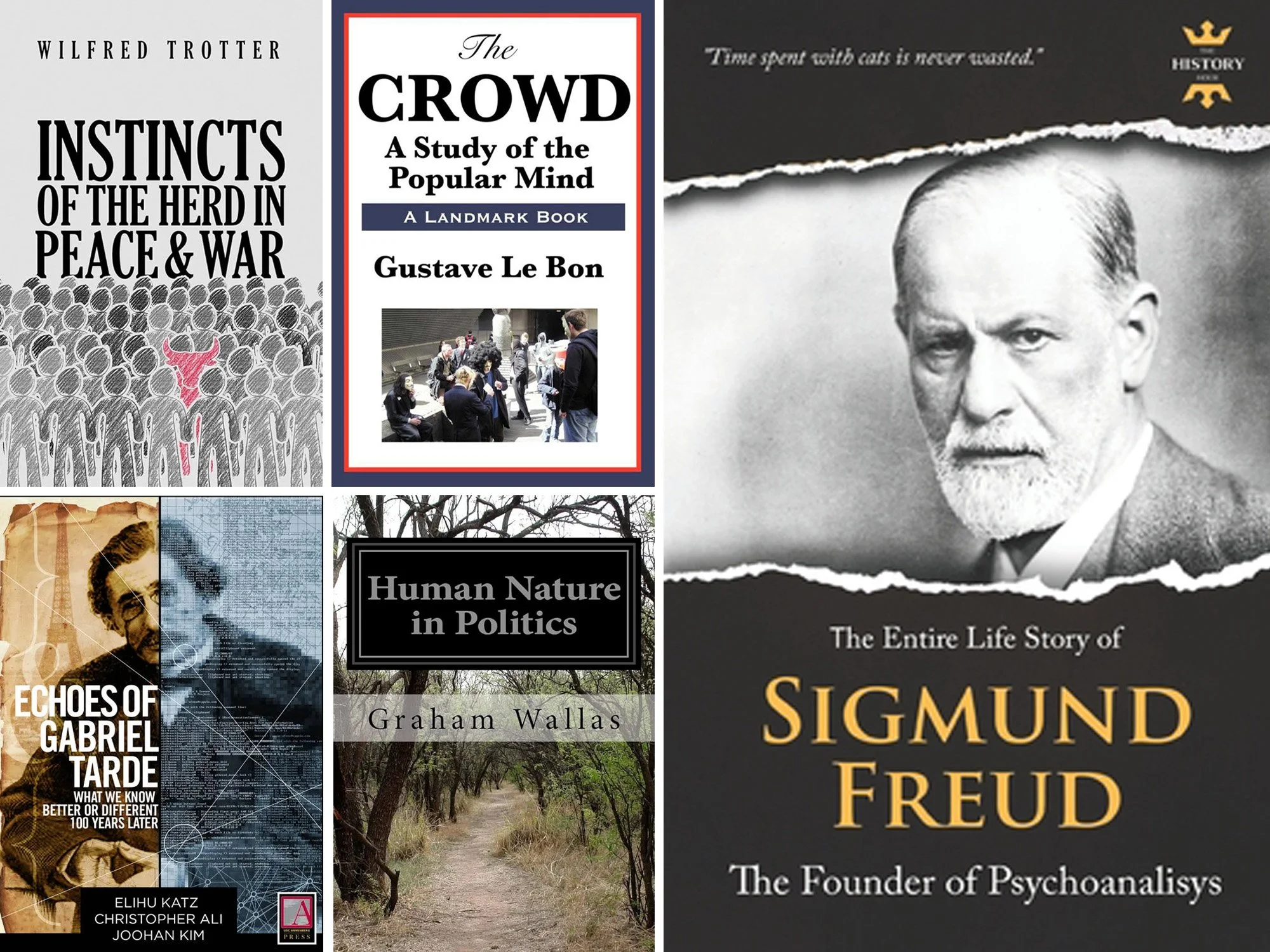
Mass Propaganda astutely exploited the new understanding of Mass Psychology, led by thinkers such as Gustav Laban (The Crowd), Wilford Trotter, (Instincts of the Herd in Peace and War), Graham Wallace, (Human Nature and Politics), and Gabriel Tarde (On Opinion and Conversation), as well as the work of pioneering psychologists such as Sigmund Freud.
World War I destroyed values and self perceptions that had once characterized American life and replaced them with fear, distrust and the hedonism of the consumer society. The new mass propaganda, designed to appeal to emotions rather than disseminate facts, proved adept in driving competing ideas and values underground.
World War I snuffed out a brief and robust period of reform in American history, one that had seen mass movements enraged at the abuses of an American oligarchy sweep across the country and demand profound change. The rise of mass propaganda made possible by industrial warfare effectively killed this populism.
The political upheavals in prior years had put numerous populists-reformers in power, including the election of Socialist mayors in cities such as Milwaukee and Schenectady.
While a few of these would linger until the 1950s the war would chart a new course for the country. War propaganda not only bolstered support for the war, including among progressives and intellectuals, but also discredited dissidents and reformers as traitors.
The rise of mass propaganda signaled the primacy of Freud, who had discovered that the manipulation of powerful myths and images playing to subconscious fears and desires could lead men and women to embrace their own subjugation and even self destruction.
What Freud and the great investigators of Mass Psychology realized was that the emotions were not subordinate to reason; while, the reverse had been true prior to World War I, as much American thinking followed post-enlightenment-European thought which relied on the assumption that reason could rule, that debate in the public sphere was driven strong rational underpinnings.
The dream had always been of a ‘pure dialectic’ embodied in data, facts, postulates, deductions or inductions, stripped of any emotional conditioning.
What Freud and the mass psychologists and, in turn, their god children-the mass propagandists, had discovered was a deep psychological truth grasped first and perhaps best by the philosophers and rhetoricians of classical Greece.
Greek philosophers did celebrate reason as nous, a reflection of divine truth enacted in the human mind, but the Greek philosophers were trained in rhetoric before dialectics.

Many classical philosophers, beginning with Plato, warned that the appeal to emotion was only as good as the man making the appeal.
But with the new 20th century mass propaganda, this warning was cast aside. As the Greeks already knew, and Freud and his followers rediscovered, Mass Propaganda as a form of emotion was only the illusion of pure dialectic.
So it was this illusion the war sold with simple slogans such as ‘the war to end all wars’, or ‘the war to make the world safe for democracy’, that did not so much emasculate intellectuals, artists and progressives, as seduce them.
Wilson easily pushed through draconian laws to squelch dissent, but he hardly needed to have bothered. Congress passed the Espionage Act in 1917 which criminalized not only espionage, but also speech deemed critical of the government. The Espionage Act and the Sedition Act became the course legal tools used by the Wilson administration to silence isolated progressives and the dwindling populist forces that questioned the war.
Progressive politics had enjoyed an upsurge before the war, bringing on a golden era of American journalism and social reform, but that was now ended. Progressivism would flicker to life again in the 1930s with the Great Depression, and then be crushed in the next war. Progressives in World War I shifted from the role of Social Critics to that of Propagandists. They did this seamlessly.
So it was the Liberals, the socialists-activists, that were actually the most susceptible to Wilson’s utopian dream of the League of Nations…because it welcomed a way for them to move from fringe to center-stage…to mitigate their alienation…to ameliorate their pariah status in a Capitalistic system.
Hedges claims they committed suicide by lending their intellectual-moral support to the war propaganda.
And Wilson manifest this new zeitgeist through primarily the likes of George Creel, a journalist, politician, author, and PR bully who Wilson made the chairman of the Committee on Public Information during World War I, in order to influence public opinion and gain support at home-abroad for the war effort.
On the other side was, Arthur Bullard, one of his a former history student at Princeton who went on to be a reporter-foreign correspondent, including in Russia.
He sent him a copy of his book: Mobilizing America in early 1917 in an effort to influence his management of the war.
“Truth and falsehood are arbitrary terms. There is nothing in experience to tell us that one is always preferable to the other. There are lifeless truths and vital lies. The force of an idea lies in its inspirational value. It matters very little whether it is true or false.” -Arthur Bullard
Basically what Hedges continues to suggest is that no other American president in history did more to damage the independence and freedom of the press or set back social reform than Woodrow Wilson.
And that his monopolization of the press-war propaganda became the template for 20th Century corporate-govt advertising/publicity…like think W regarding Iraq.
From 1909-10, 58% of Americans cities had a press that was varied in ownership-perspective. But by 1920, that same percentage represented those cities in which the press was controlled by an info monopoly.
In a 1920 memoir titled: How We Advertised America, George Creel wrote:
‘War was not fought in France alone. It was the fight for the minds of men, for the conquest of their convictions and the battle line ran through every home in the country.’
BC AMERICANS DID NOT WANT TO GET INTO WWI.
Like Wilson was the state trooper flying along the interstate in pursuit…and media companies were the other drivers drafting behind him. By 1930, 80% of American cities had given way to press monopolies.
This virus of Nationalism infected every aspect of American society. Russian intellectual-writers that continued to reject the war were deported.
The severe weakening of populist forces during the war led to their obliteration when it ended…but the phenomenon of mind-control propaganda DID NOT END.
The METHODS invented for IT were too valuable to be tossed.
They inspired Edward Bernays…Freud’s nephew, and the original Madison Ave father of our extremely manipulative modern PR protocol…who ushered in the current Mass Propaganda tools currently used by govt/corp for CONTROLLING of us, still, to this day.
So the powerful techniques of appealing to pure emotion, first authorized by Wilson, a liberal..was right there in the thick like any Republican-Conservative in acting as an Enemy of Truth…whether creating pseudo-events to confuse the public or constantly taking the public pulse through surveys-opinion polls to appear to give people what they desired.
In this way the War launched the destruction of American cultures.
The mass propaganda eroded distinct regional cultures and turned consumption into an inner compulsion to eradicate difference. Old values of thrift, regional identity that had its own iconography, aesthetic expression, and history were destroyed by corporate culture. New desires and habits were implanted by corporate advertisers to replace the old.
As newspapers consolidated into chains…local/independent voices were silenced.
The business of Mass Propaganda brought vast sums of advertising revenue to all organs of mass communication.
It began the consolidation of the press by huge corporations that would end with nearly everything we see, here, and read…disseminated roughly by a half dozen corporations.
American radicalism had been making great strides right up to 1914…then the WWI was the rock on which it shattered.
By the late 1920s you had the emergence of a fairly elaborate social-psychological apparatus designed to take the temperature of public emotions, not for the purpose of reporting on what people feel, but for the purpose of shaping what people feel.
The amount of money that goes into the miseducation of the American people is far vaster and far more enthusiastically spent than that which goes into the education of the American people.
The liberal class, believing it had to fit its ideas into the new sloganeering of mass communications, began to communicate in the child like vocabulary and simplistic sound bites demanded by commercial media intellectual debate. Once a characteristic of the country's political discourse withered, the liberal class became seduced by the need for popular appeal in.
In addition, with the loss of True Liberalism came the loss of THEATRE…again the Greeks knew all full to well how important that is. With performance art/Hollywood onboard to manifest the propaganda too…there was truly no dissenting voice left at all.
The new corporate capitalism and mass production sustained themselves through the promotion of a New Ethic that promoted leisure, self indulgence, and wasteful consumption. It made consumption more important than production.
A literary mid-century literary critic observed that after the War, artists, too became devoted to self expression, political cynicism, and hedonism, including the cult of the body. These values were embraced in the name of the counter-culture, but they were also the core qualities corporate capitalism sought to inculcate in the public.
This cult of the self was central to the Bohemians and later the Beats.
Death of the Liberal Class | Chris Hedges
I am a Creative Strategist and Cultural Futurist focused on unearthing the Past that keeps predicting our Future such that we can create the Society we want.